

Trigger Point Injections
Trigger point injections may be considered in selected cases of myofascial or muscle-related pain when the history and examination support a focal soft-tissue pain source. At 91视频, they are used selectively, as one option within a broader diagnostic and treatment plan rather than as an automatic response to muscle pain.
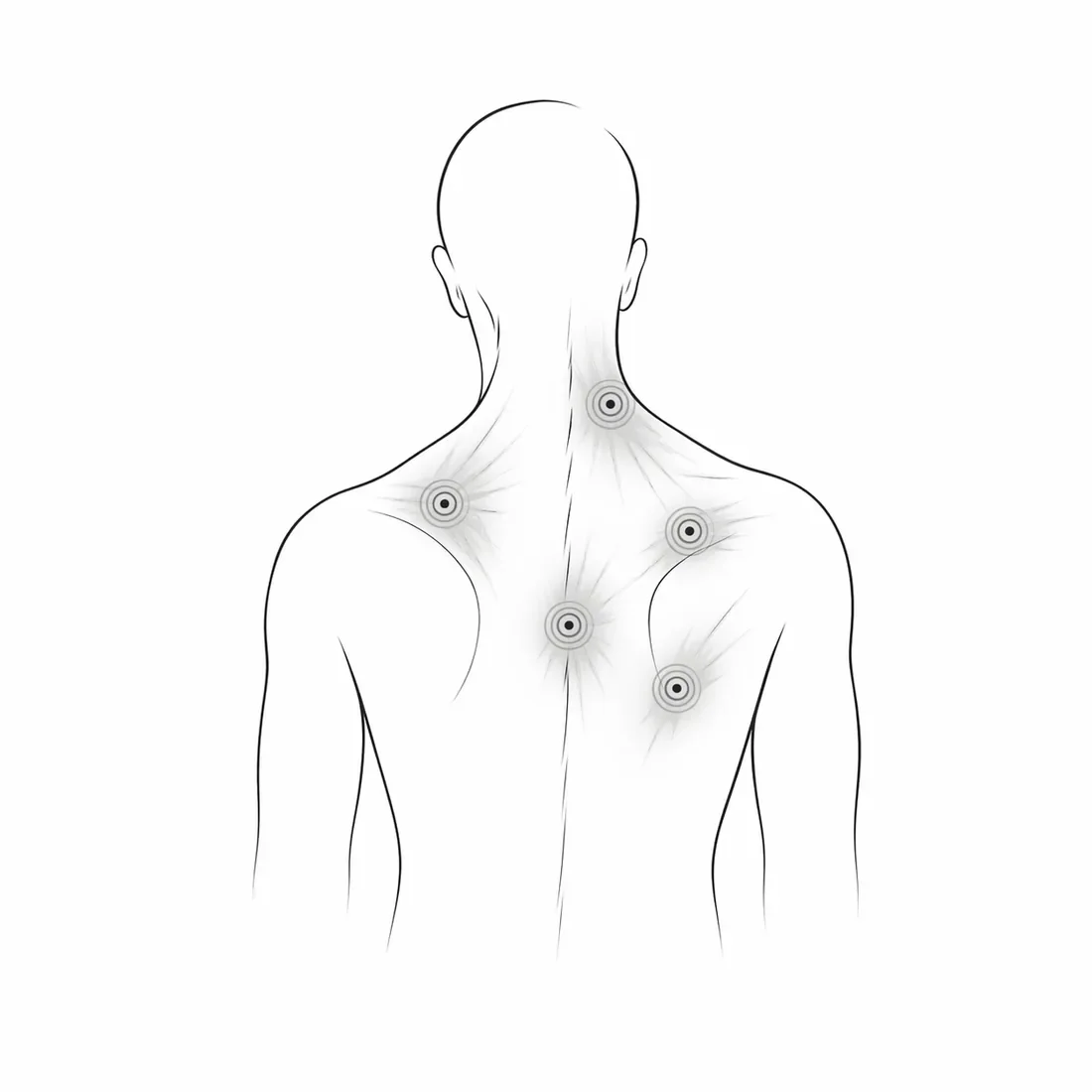
What Trigger Point Injections Are
Trigger point injections are used to treat focal areas of muscle or fascial irritability that may contribute to localized pain or a referred pain pattern. Patients often describe these as 鈥渕uscle knots,鈥� but treatment decisions are based on the history and physical examination rather than that label alone.
In practical terms, the goal is not to treat every sore muscle. The goal is to identify whether there is a focal, clinically meaningful trigger point pattern that appears relevant to the patient鈥檚 symptoms. In selected cases, trigger point injections may be used to address myofascial pain involving the muscles of the shoulder, hip, back, neck, or other symptomatic muscle groups when the examination supports that pattern.
Not all neck and upper back pain, shoulder girdle pain, or low back muscular pain is myofascial in origin. Pain in these regions may also arise from joints, discs, nerves, tendons, ligamentous structures, or overlapping biomechanical issues. That distinction matters.
When They May Be Considered
Trigger point injections may be considered when examination suggests a focal myofascial pain generator. This may involve the neck, trapezius, shoulder or periscapular region, thoracic spine, lumbar paraspinals, gluteal region, or other muscular areas when clinically appropriate.
Appropriateness depends on the history, physical examination, pain pattern, mechanical factors, function, and prior response to treatment. A focal examination finding matters more than a broad description of tension or soreness alone.
Conservative care remains important, but it is not approached as a rigid waiting period. Some patients have already tried medication, exercise, physical therapy, or activity modification without meaningful progress. Others present with symptom severity, functional limitation, work or travel demands, athletic timelines, or other practical considerations that may justify a more direct treatment strategy sooner.
This is especially relevant where myofascial pain overlaps with posture, desk-based strain, lifting mechanics, gym training, or active recovery patterns often seen in sports medicine.
Ultrasound Guidance in Selected Cases
Many trigger point injections are performed using careful physical examination and palpation. In selected cases, however, ultrasound guidance may be used to improve visualization of the target muscle and surrounding anatomy.
This can be particularly useful in anatomically sensitive regions, with deeper muscular targets, or where visualization may improve procedural precision and safety. The cervicothoracic and periscapular regions are examples where anatomy can be less forgiving and where imaging may help clarify needle trajectory and nearby structures.
Ultrasound-guided trigger point injections are not required in every case, and ultrasound does not guarantee a better outcome. Its role is selective and anatomy-informed. When used, it reflects a safety-conscious procedural decision rather than a routine marketing feature.
What a Visit Typically Involves
Evaluation comes first. A visit typically includes a focused history, physical examination, palpation of symptomatic muscle groups, and review of biomechanics or movement patterns when relevant. From an osteopathic perspective, focal muscle pain is often assessed in the context of posture, compensation, regional mechanics, and adjacent dysfunction rather than as an isolated finding. When the examination supports a focal myofascial pain source, treatment may be performed the same day.
How Trigger Point Injections Fit Into a Broader Treatment Plan
Trigger point injections may be used to reduce pain, improve tolerance for movement, or help patients progress with exercise, physical therapy, manual care, osteopathic treatment, ergonomic correction, or return to activity. In selected cases, they can be especially useful when focal muscle pain is limiting the ability to participate fully in corrective treatment.
From an osteopathic and sports medicine perspective, the goal is not simply to quiet an irritable muscle, but to understand why that muscle has remained overloaded or symptomatic. In some patients, that may involve scapular mechanics, thoracic mobility, rib dysfunction, cervical or lumbar segmental irritation, pelvic asymmetry, gait pattern, lifting mechanics, or training-related compensation. When appropriate, trigger point injections may be combined with osteopathic manipulative treatment and physical therapy as part of a broader plan intended to improve movement quality, reduce recurrent strain, and support more durable functional progress.
This does not mean every patient needs all three. In some cases, injection alone is not the right choice. In others, reducing focal pain first may make osteopathic treatment or physical therapy more tolerable and more productive. The sequence depends on the diagnosis, the pain pattern, the functional limitation, and the practical demands of the patient鈥檚 work, travel, or activity level.
When Trigger Point Injections Are Not Enough
Trigger point injections are only one component of treatment for persistent muscle-related pain. When symptoms recur despite appropriate rehabilitation, movement-based treatment, osteopathic care, or targeted injections, the diagnosis and contributing factors should be reassessed.
For selected refractory myofascial pain patterns in which conventional trigger point injections provide meaningful but short-lived improvement, botulinum toxin chemodenervation may sometimes be considered as an off-label treatment option after further evaluation.
What Trigger Point Injections Do Not Fix
Trigger point injections do not correct every cause of neck, shoulder, back, or gluteal pain. They do not treat all muscle pain, and they are not a substitute for diagnostic reasoning.
Pain in these regions may arise from joints, discs, nerves, tendons, ligamentous structures, movement dysfunction, central sensitization, or multiple overlapping pain generators. Some patients improve substantially, some partially, and some not at all. If benefit is limited, the explanation may be diagnostic complexity rather than 鈥渇ailure鈥� in a simplistic sense.
For example, persistent pain may ultimately reflect a mixed picture involving regional mechanics, tendon-related pain, referred spinal pain, or another source better addressed through a different treatment plan. In selected cases, this may lead to consideration of radiofrequency ablation, advanced injection options, or another treatment strategy based on the underlying diagnosis rather than the symptom label alone.
Risks and Limitations
Trigger point injections are generally well tolerated, but soreness, bruising, transient flare, incomplete relief, or no meaningful improvement can occur. Response varies by patient and by diagnosis.
Careful technique is used to reduce procedural risk. In selected anatomical regions, ultrasound visualization may also be used when it may improve target identification and awareness of surrounding structures.
Why This Approach Is Different
At 91视频, trigger point injections are not treated as a standing protocol. The emphasis is on physician-led evaluation, selective use of procedures, attention to mechanics and function, and willingness to reassess when the clinical picture is not straightforward. That means asking whether the pain pattern is truly myofascial, whether the target is clinically meaningful, and how the injection fits into the broader treatment plan. Depending on the examination, this may include osteopathic manipulative treatment, rehabilitation, evaluation of back or neck pain, or consideration of another pain source. When persistent symptoms appear to arise from a joint, nerve, tendon, or other structure rather than primarily from a trigger point, a different treatment approach may be more appropriate or may be incorporated alongside trigger point treatment to address other clinically relevant contributors. In selected cases, this may involve nerve blocks, radiofrequency ablation, or advanced injection options, depending on the diagnosis and treatment objective. It also means recognizing when the better decision is not to inject鈥攐r not to repeat an injection automatically. For patients who value efficiency, judgment, and clarity, this selective and anatomy-informed approach avoids applying the same treatment sequence to every pain complaint.
Thoughtful Evaluation, Individualized Treatment
For patients dealing with persistent trapezius pain, myofascial pain, neck and upper back muscle pain, shoulder girdle pain, or other focal muscle-related complaints, the first step is a careful evaluation. At 91视频, trigger point injections are considered selectively, in the context of the broader diagnosis, mechanics, and treatment plan.
If the examination supports a clinically meaningful trigger point pattern, treatment may be considered as part of an individualized approach.